The "Robot Voice" Problem
You know it when you see it. The perfect grammar. The predictability. The "In the ever-evolving landscape of..." introductions. It's the hallmark of AI writing, and frankly, it's boring.
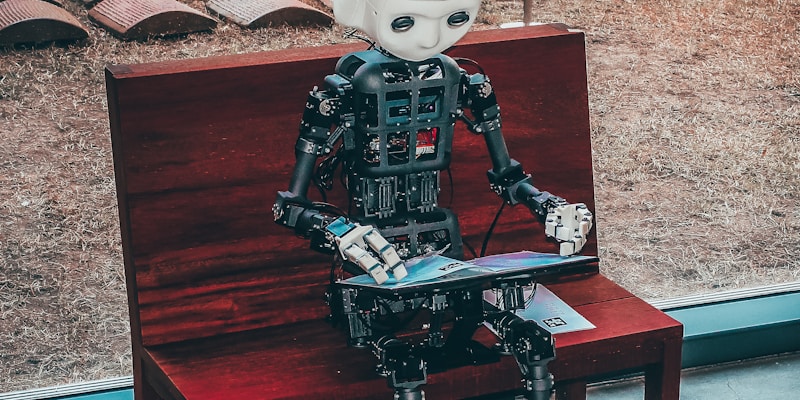
We call this the Uncanny Valley of Text. It's technically perfect English, but it feels... off. Soulless. It lacks the messiness, the rhythm, and the weirdness of actual human speech. If you want your content to connect, you need to break the machine's perfection.
Technique 1: The "So What?" Test
AI loves to list facts. It will tell you what something is, but it rarely tells you why it matters unless you force it.
The Fix: Don't just ask for a definition. Ask for the implication. Instead of "Explain SEO," try "Explain SEO like you're convincing a skeptical business owner it's worth the money." Suddenly, the AI stops lecturing availability and starts arguing for value. That's human.
Technique 2: Intentional Imperfection
Humans use sentence fragments. We start sentences with "And" or "But." We use parentheses to whisper secrets (like this). AI, by default, writes in complete, balanced sentences.

The Fix: Add a style modifier to your prompt: "Write in a punchy, conversational style. Use short sentences. Don't be afraid of fragments. Write like you're talking to a friend over coffee."
Technique 3: Sensory Details
AI has no body. It has never felt cold rain or tasted stale coffee. That's why its descriptions are often abstract ("It was a beautiful day") rather than concrete ("The sun hit the pavement hard enough to smell the asphalt").
The Fix: Explicitly ask for sensory language. "Describe the setting using all five senses. Don't just say they were busy; describe the noise, the clutter, the smell of burnt office coffee."
Technique 4: Analogies and Metaphors
AI is a literal thinker. Humans are metaphorical thinkers. We understand complexity by comparing it to what we already know.
The Fix: Ask for analogies. "Explain the blockchain using an analogy about a shared Google Doc." When the AI uses a comparison, it instantly feels more relatable and less like a textbook.
Technique 5: Variance in Rhythm
Robot text has a flat rhythm. Da-da-da-da. Da-da-da-da. Human text is jazz. It speeds up. It stops. It meanders for a while, explaining a complex thought in a long, winding sentence that effectively builds tension before—bam. A short stop.

The Fix: Ask for "varying sentence length" in your prompt. Or, better yet, rewrite existing AI text by chopping long sentences in half and combining short ones.
Technique 6: The "Opinion" Injection
The biggest giveaway of AI content is neutrality. AI is designed to be safe and objective. Humans, however, have biases, preferences, and hot takes. We trust people who stand for something.
The Fix: Ask the AI to take a stance. "Argue that remote work is better than office work, but acknowledge one major downside." Or manually add a sentence starting with "In my experience..." or "I honestly believe..." to ground the text in reality.
The Golden Rule: Edit Hard
The best "human" AI content isn't pure AI. It's a cyborg. Use the AI to generate the structure, the research, and the rough draft. Then, get your hands dirty.
- Cut the fluff ("In conclusion," "It is important to note").
- Inject a personal opinion (AI doesn't have opinions; you do).
- Add a personal anecdote ("I once tried this and...").
The goal isn't to hide that you used AI. It's to ensure the final product has your fingerprints on it. That's what your readers are here for.